
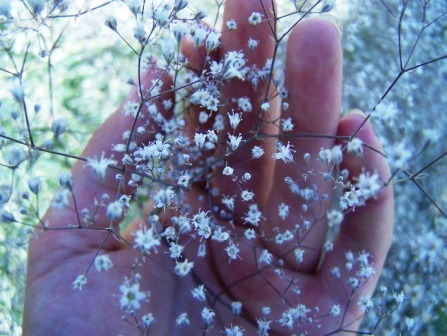
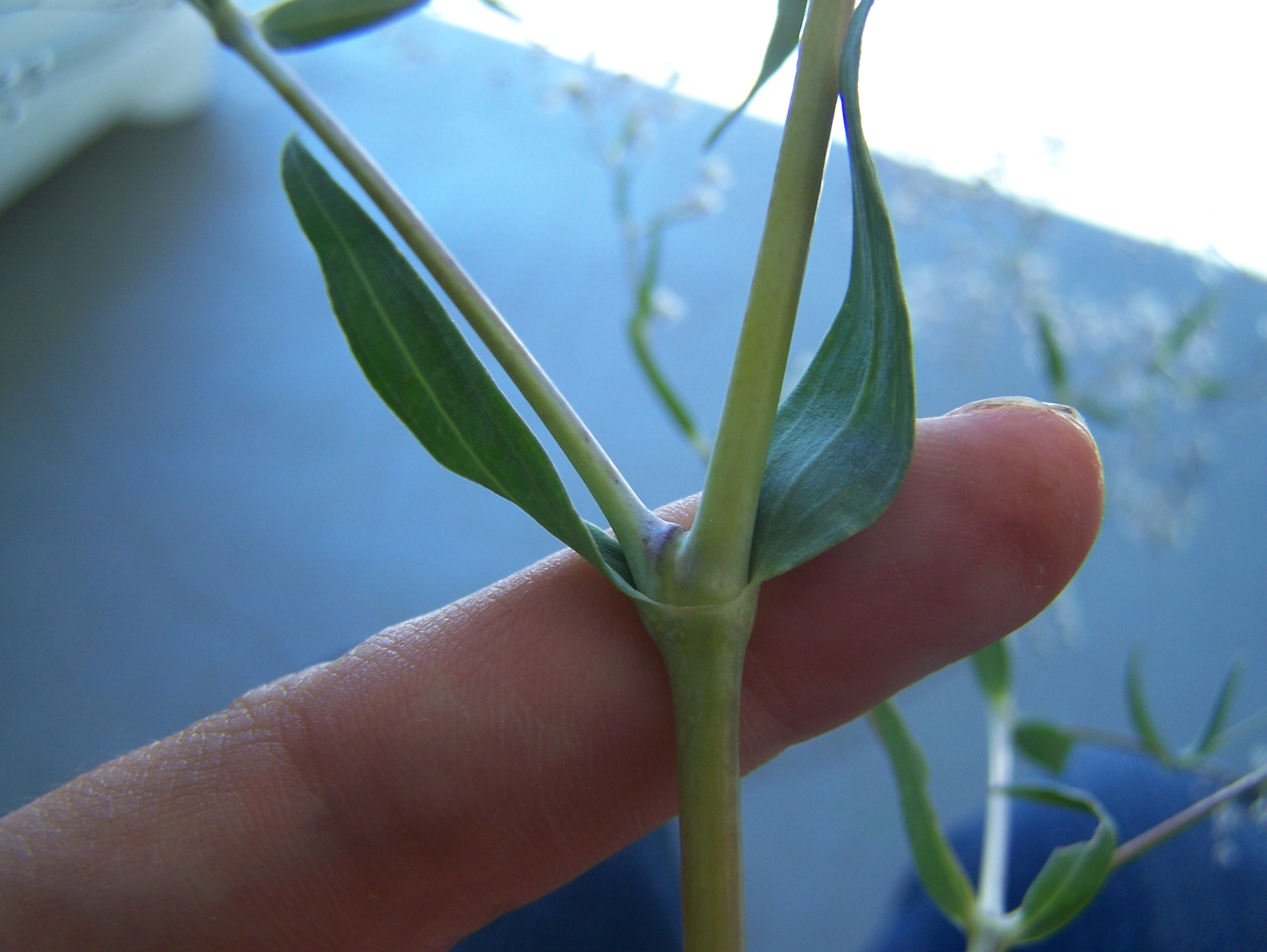
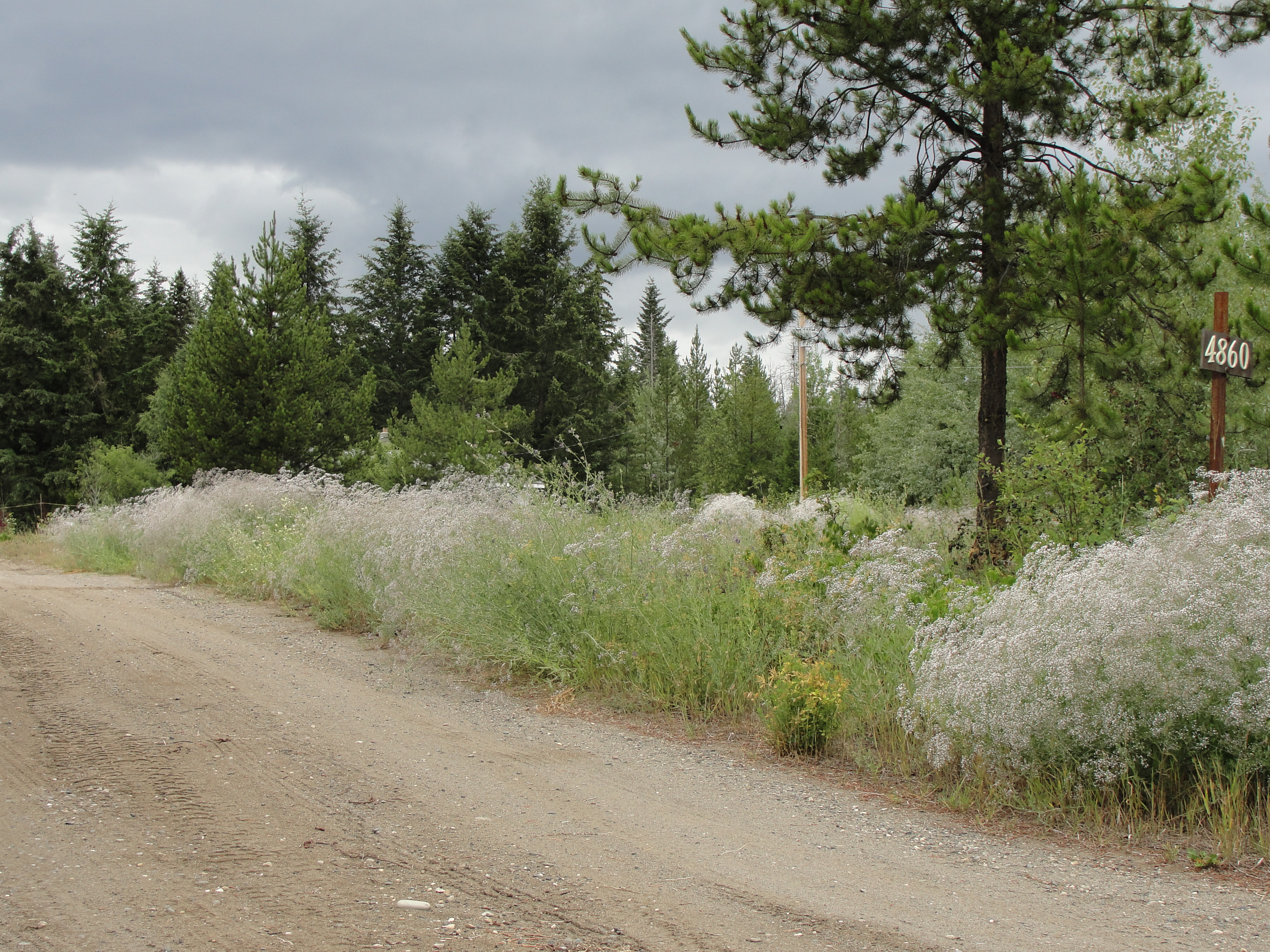
Latin Name: Gypsophila Paniculata
Physical Description: Baby's breath was introduced to North America in the late 1800s (Royer and Dickinson 1999). It has an extensive fibrous root system and is found in a wide range of habitats across its range.
Type: Perennial
Habitat and Impact: In the Cariboo Chilcotin Coast region, baby's breath appears to be found exclusively on disturbed sites on warm aspects at low elevations; however, it can invade pastures and rangelands.
Method of Spread: Seeds spread by wind or by plant tumbling. A single baby's breath plant may produce up to 13,000 seeds and the seeds do not seed bank well. The use of baby's breath as an ornamental in flower arrangements may lead to infestations in graveyards, roadside memorials or other locations where flowers may be placed. Public education efforts should explain this potential method of invasive plant spread to reduce the potential for these new infestation sites.
