
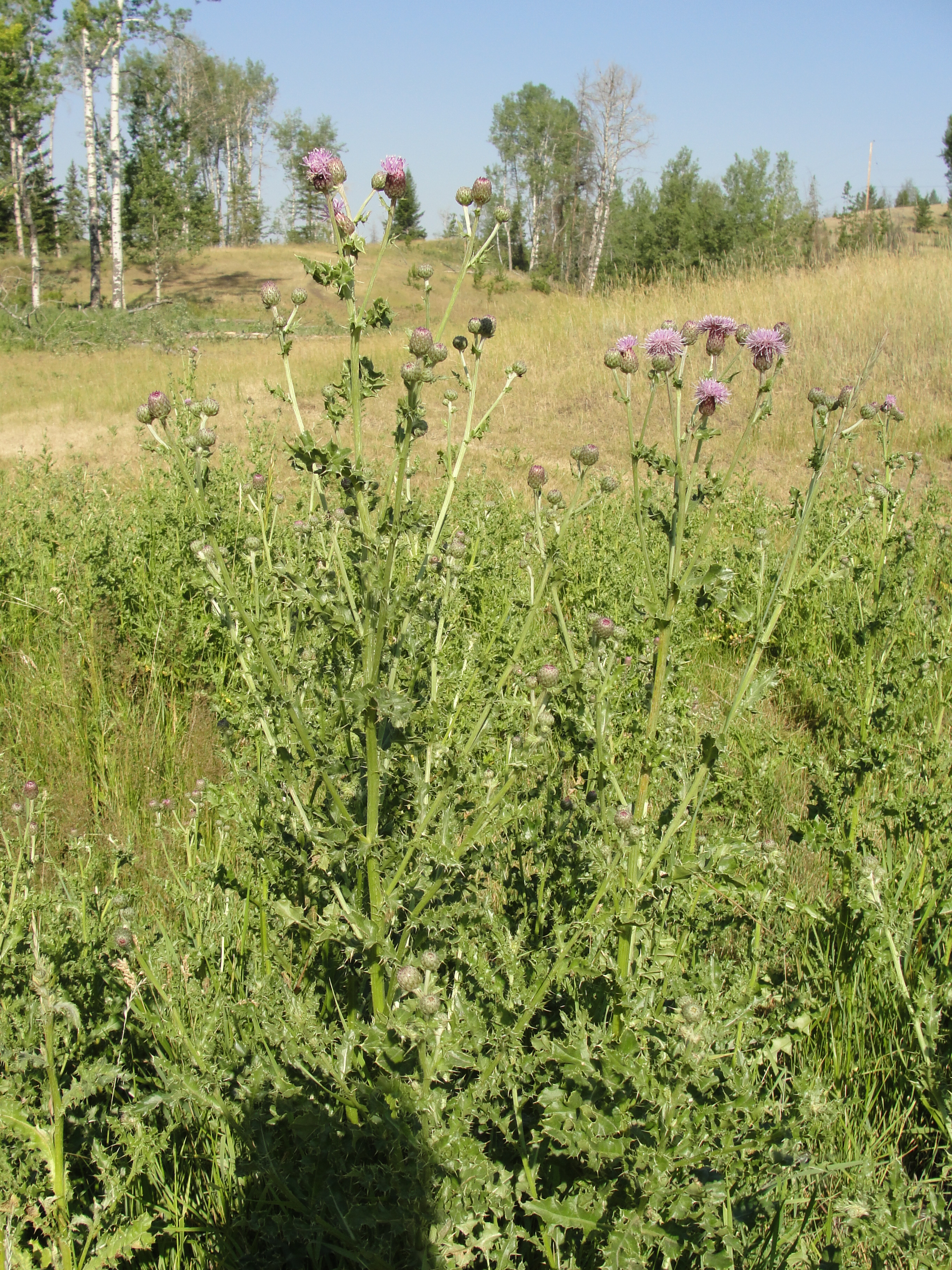
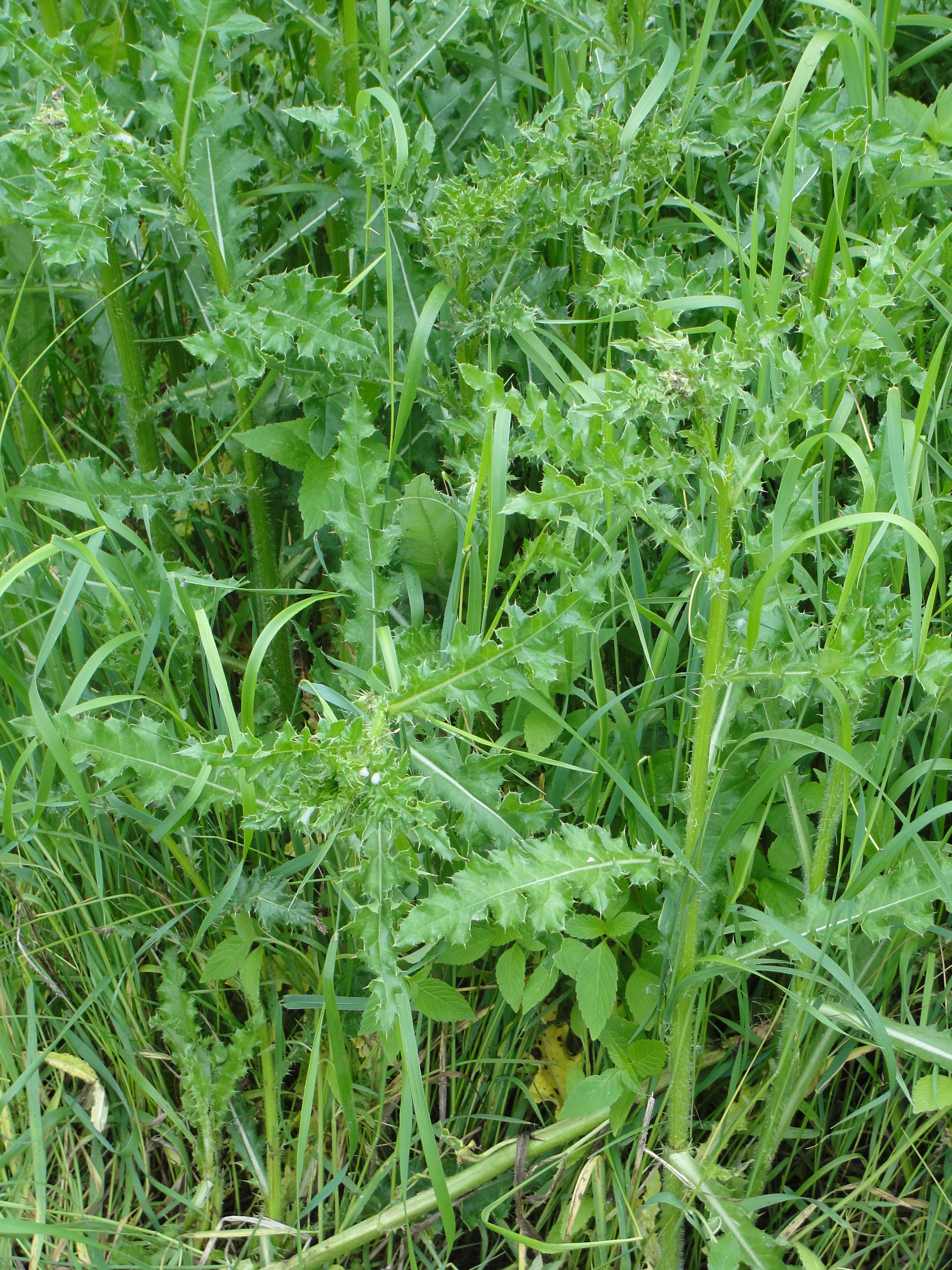
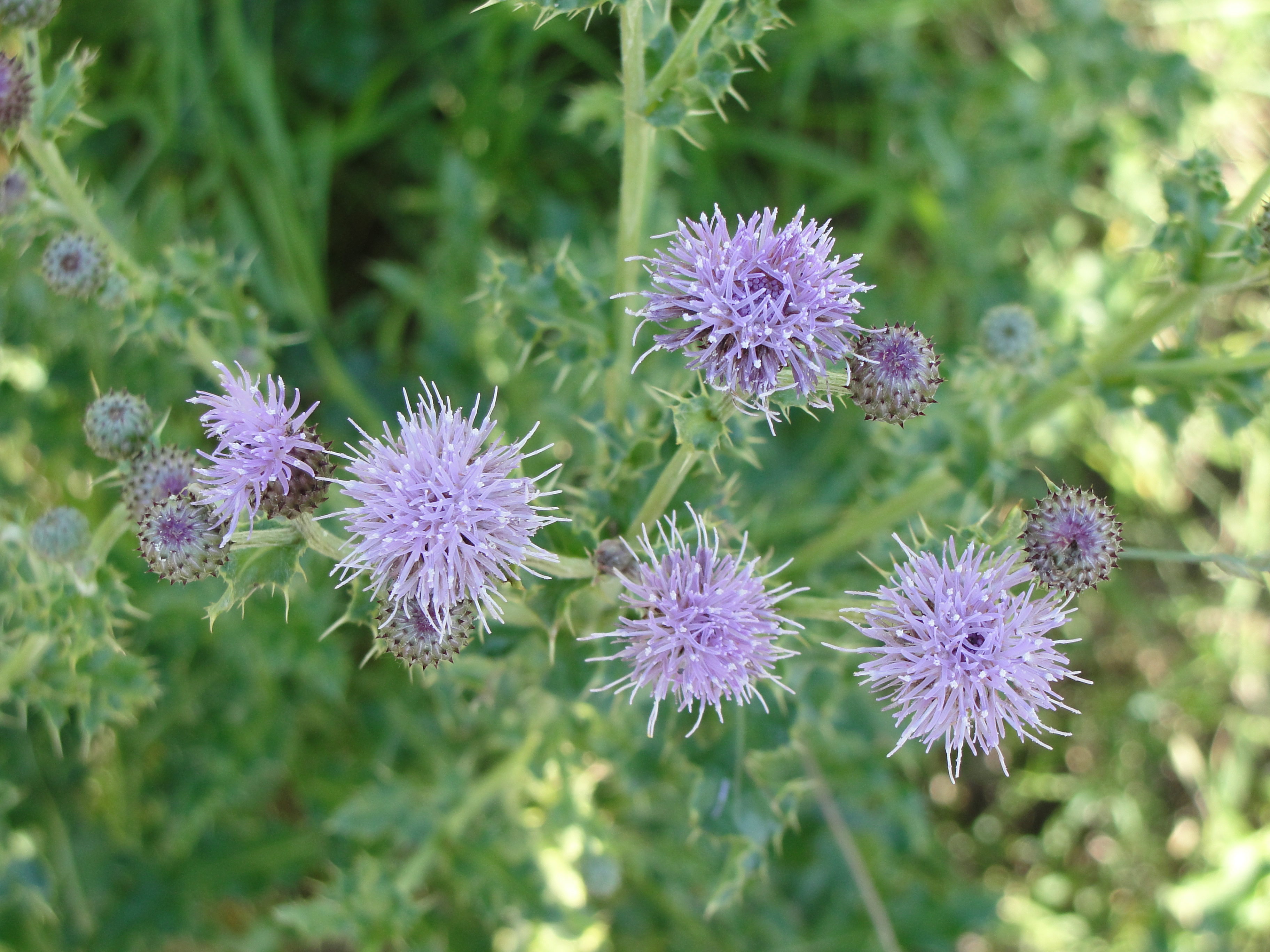
Latin Name: Cirsium arense
Physical Description: Canada thistle is a perennial forb introduced into North America from south-eastern Europe or the eastern Mediterranean and is the most widely distributed thistle in North America (Morishita 1999).
This plant has an extensive root system spreading laterally and quickly, up to six metres in a single growing season, and penetrating to 6.75 metres deep in the soil (Morishita 1999). Canada thistle may grow to two metres m tall and can form dense monocultures.
Type: Perennial
Habitat & Impacts: Dense infestations of Canada thistle may exclude most or all native species from heavily infested sites. Commonly occurs adjacent to riparian areas and after logging. The spiny leaves and stems make Canada thistle unpalatable to most livestock and limit recreational use in infested areas. Canada thistle can dramatically reduce forage production and use of pastures by livestock.
Method of Spread: A single plant can produce up to 6400 seeds per flower stalk (Morishita 1999) but the main method of spread is by roots. Seeds are spread by wind and water and in crop seed, hay, or livestock manure. Canada thistle seeds may remain viable in the soil for over 20 years.
