
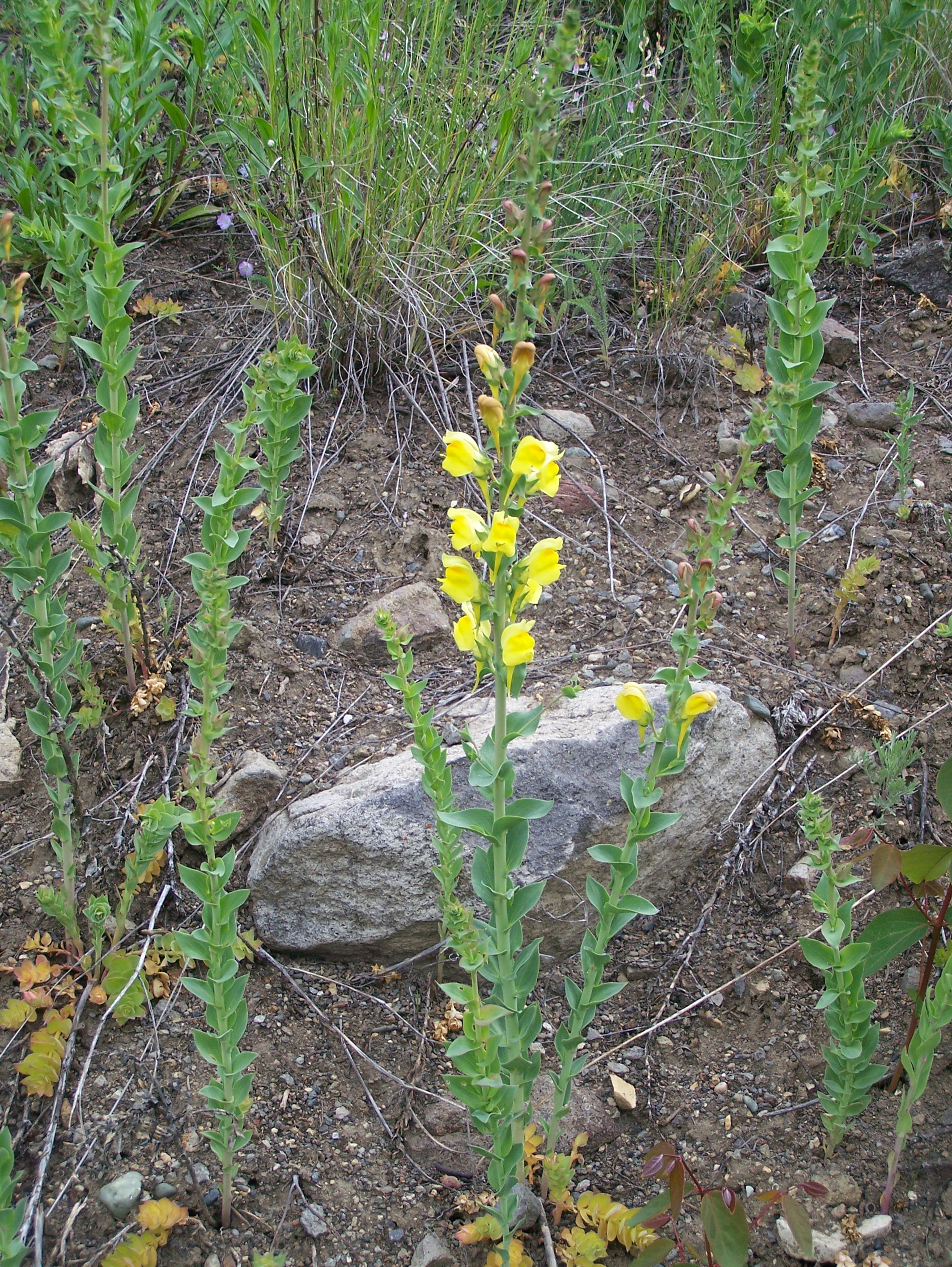
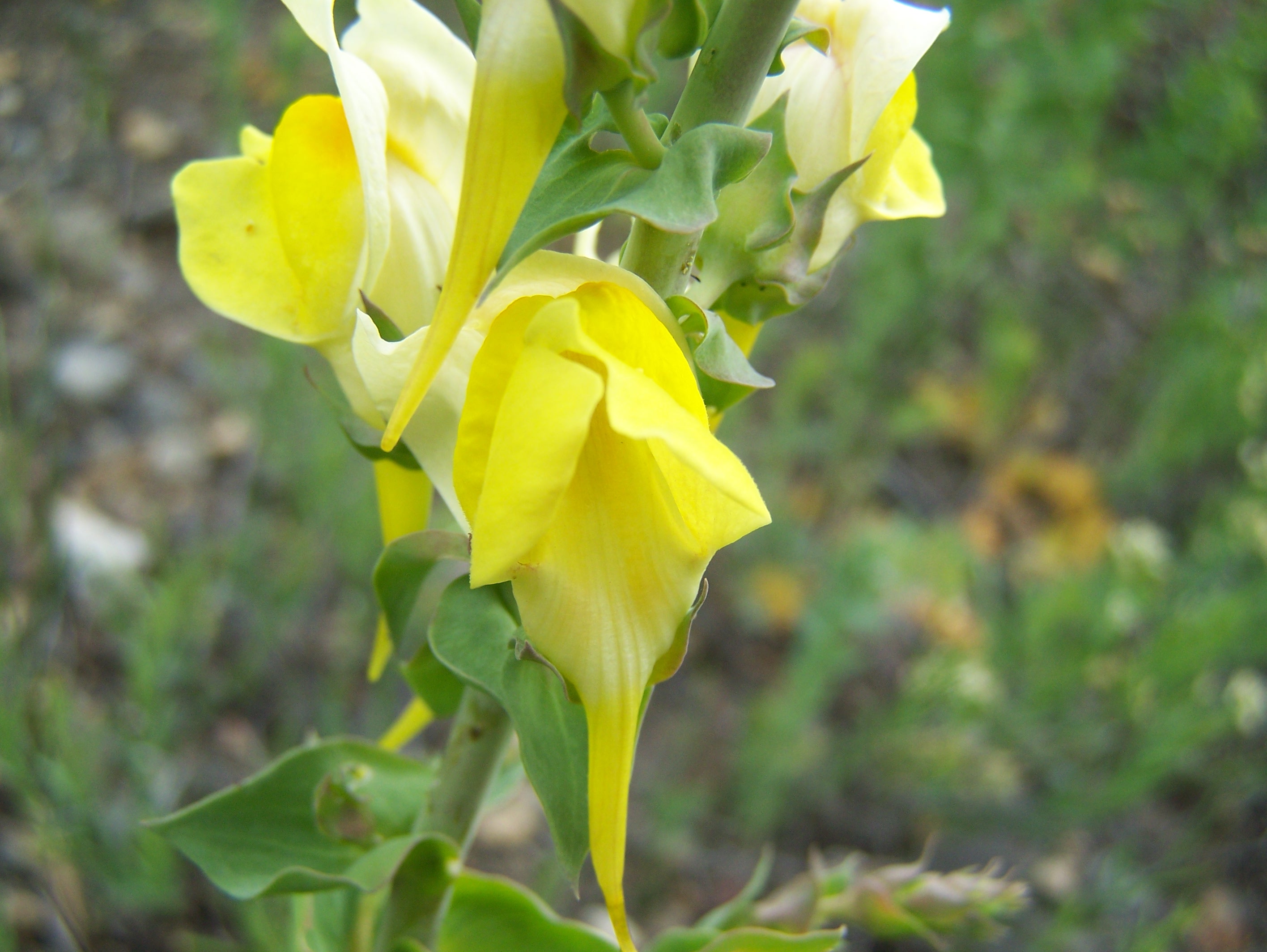
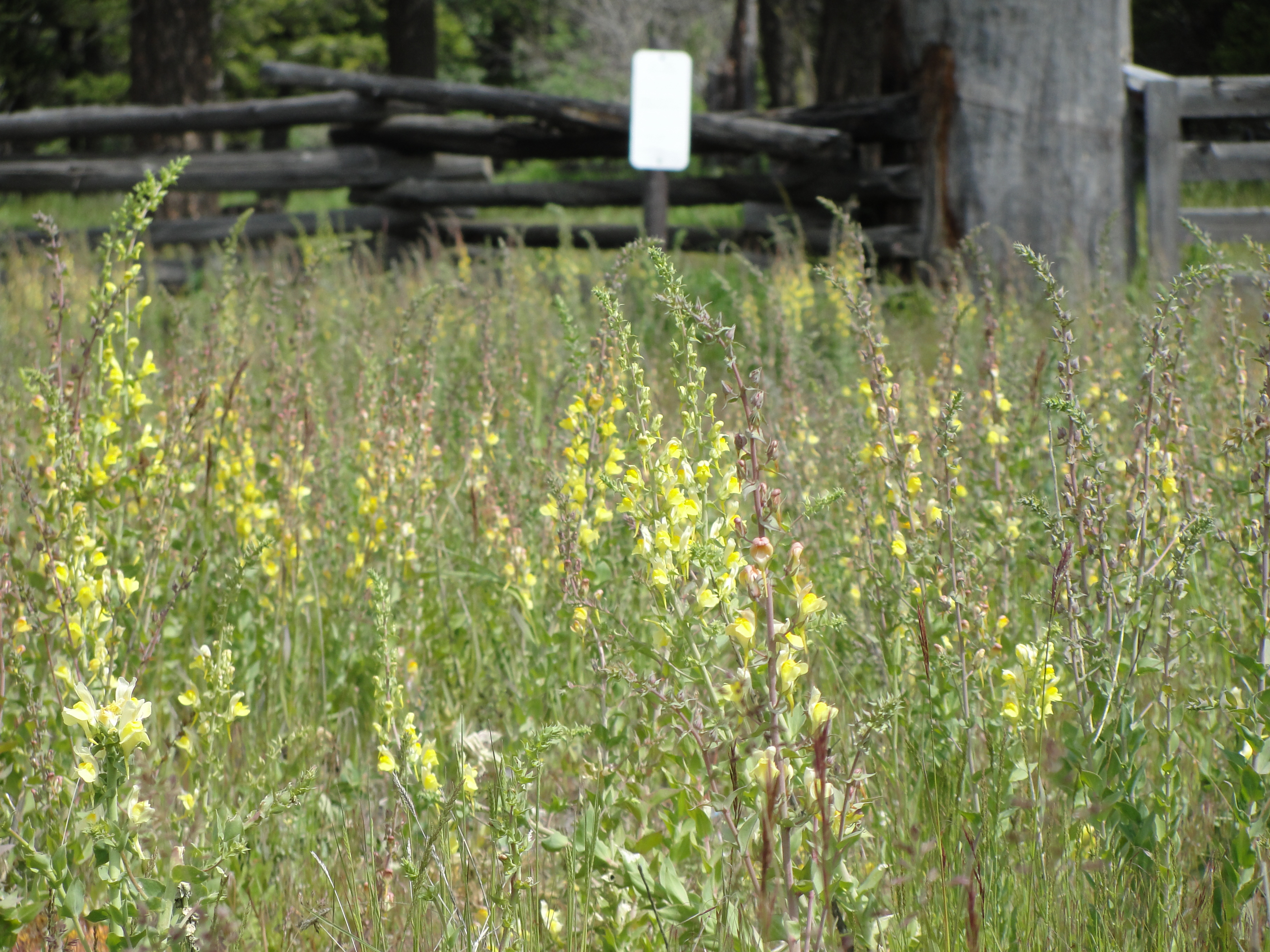
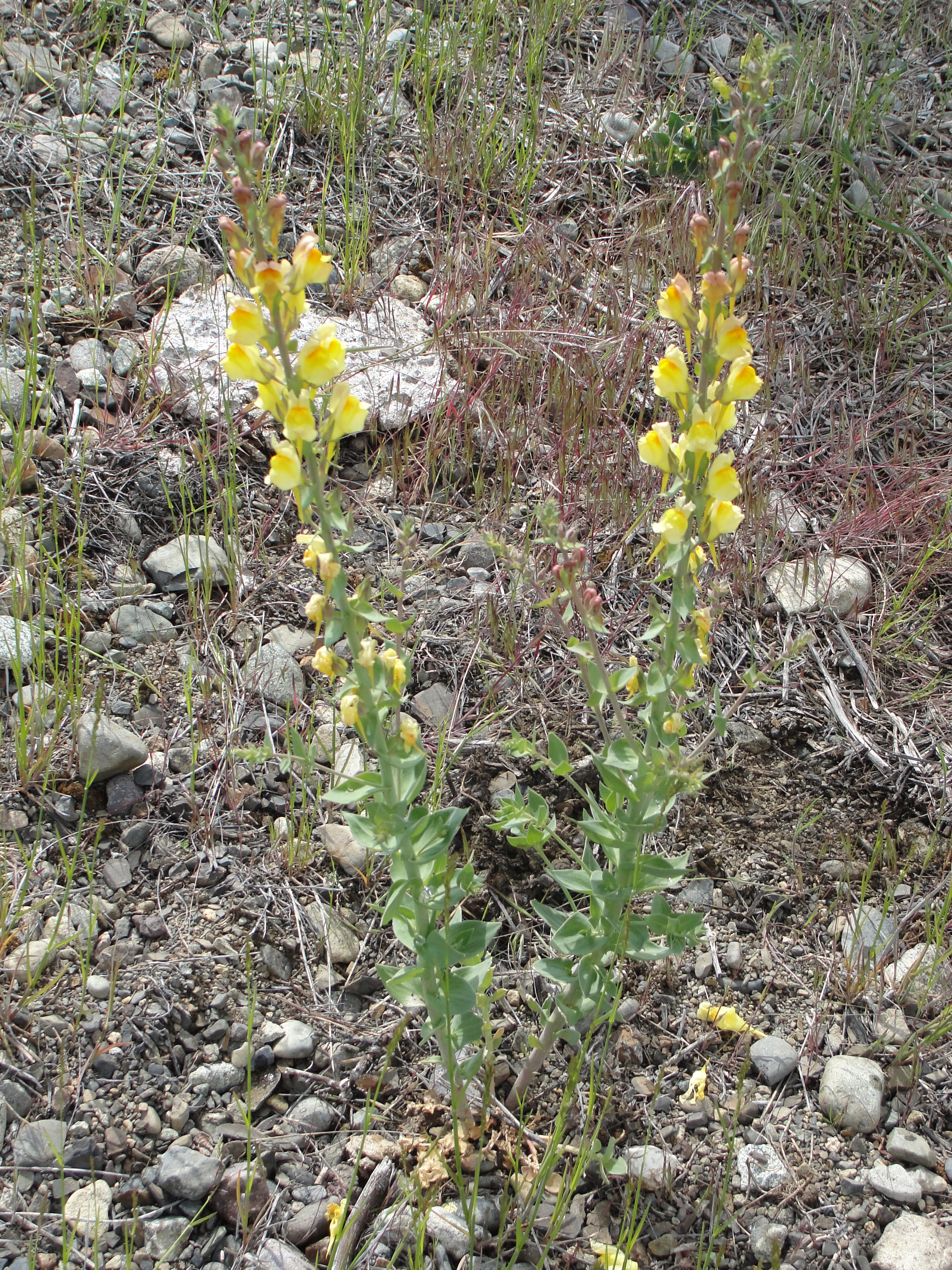
Latin Name: Linaria dalmatica
Physical Description: Dalmatian toadflax is a perennial forb with a large taproot, waxy, fleshy leaves, and a showy spike of bright yellow flowers.
Type: Perennial
Habitat & Impacts: It can grow in a wide range of habitats from gravelly, disturbed roadsides to open forests. Infestations of Dalmatian toadflax can reduce forage quality and quantity for livestock and can reduce native vegetation cover in areas of severe infestation. Toadflax can displace sod-forming or bunchgrasses and increase soil erosion, surface runoff, and sediment production (Lajeunesse 1999). Cattle may occasionally graze toadflax flower stalks, but this may lead to mild poisoning and usually, cattle avoid this species. Sheep will graze toadflax without apparent ill effect.
Method of Spread: Dalmatian toadflax reproduces by seed or can spread vegetatively from the roots. Each plant can produce a very large number of seeds, up to 500,000 per plant, but most seeds land close to the parent plant (Robocker 1970). However, birds and mammals may eat Dalmatian toadflax seedheads and spread seeds a considerable distance. Dalmatian toadflax seeds may remain viable in the soil for up to ten years. Dalmatian Toadflax can also spread by creeping roots.
