Latin Name: Berteroa incana
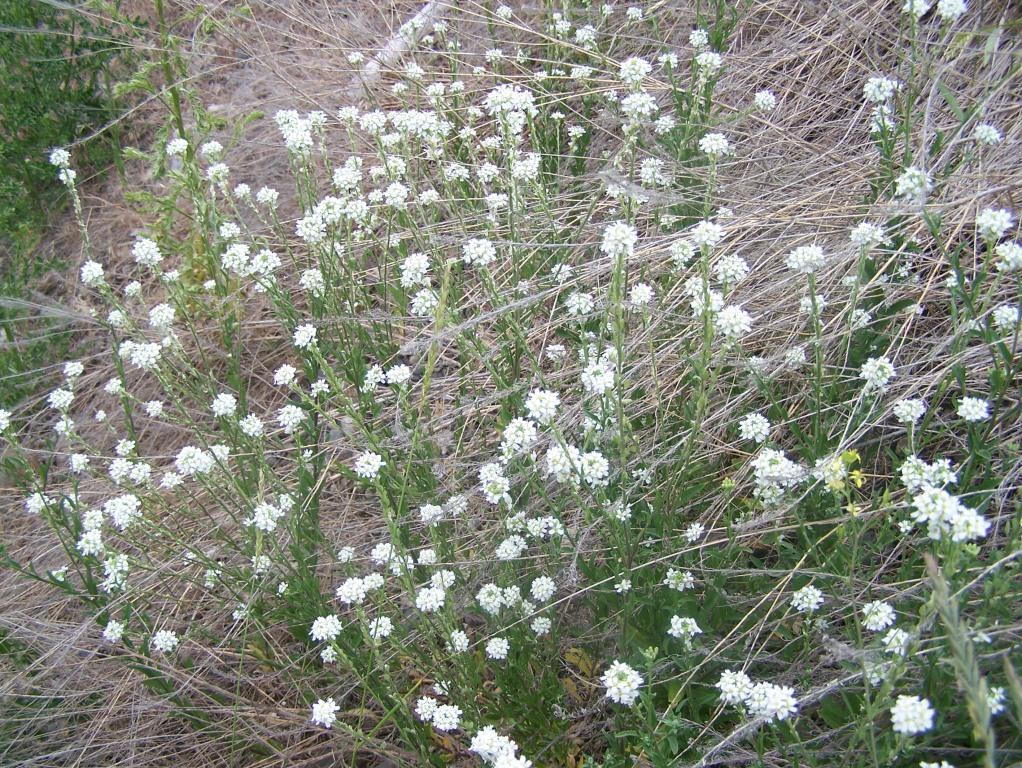
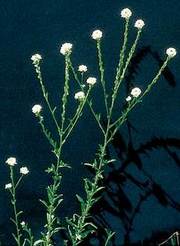
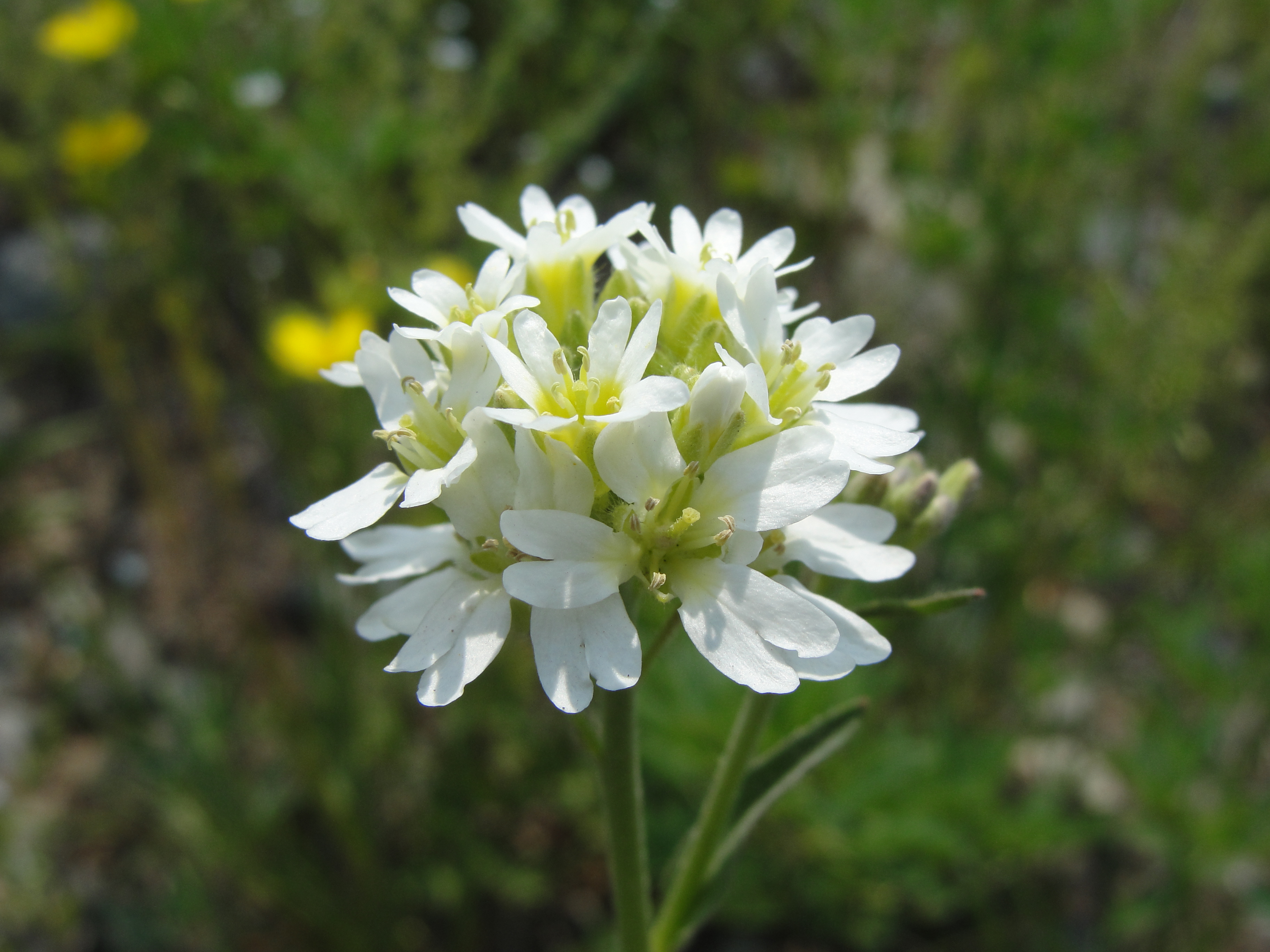
Physical Description: Hoary alyssum is an upright herb that can grow up to 1m tall, single, or multiple stems with small whitish hairs that cover the stems and leaves. The leaves are lance-shaped, rough and fell like sandpaper, greenish in colour and clasp closely to the stem. It has small white flowers that grow in clusters with deeply notched petals. Oval seedpods are 5-8mm long, somewhat flattened, and held close to the stem. One plant can produce about 2,600 seeds..
Type: Biennial or short-lived perennial forb.
Habitat & Impacts: Hoary alyssum is found primarily on disturbed sites and prefers sandy or gravely well-drained sites. Hoary alyssum can be a serious problem for horse owners as the ingestion of sufficient quantities can cause a number of diseases in horses. This species can also become a serious problem on heavily used rangelands and may displace native vegetation, reducing forage production for wildlife and livestock.
Method of Spread: This species reproduces exclusively by seed which is produced in moderate amounts by each plant. Seeds are produced from the first flower in late spring right up until frost and are spread by wind and water.
