
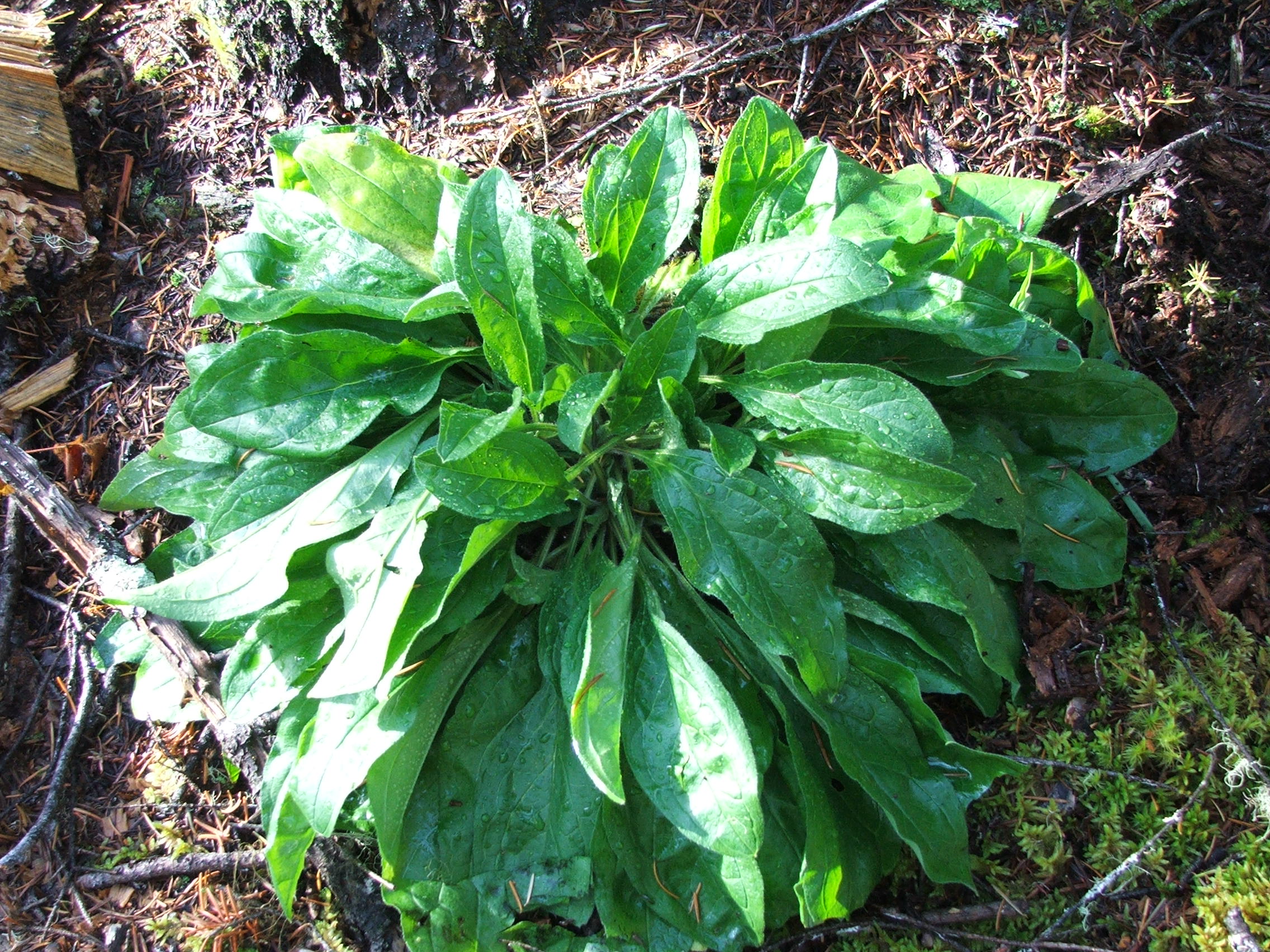
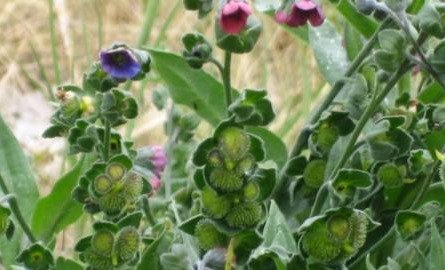
Latin Name: Cynoglossum offcinale
Physical Description: Hound's tongue is a biennial or short-lived perennial forb with a woody taproot. This species can grow to 1.2 m tall.
Type: Biennial to short-lived perennial
Habitat & Impacts: Hound's tongue prefers dry disturbed sites at low to medium elevations. Hound's tongue can establish in open grasslands to forests, particularly in areas with alkaline soils. Its barbed seeds readily stick to hair and fur, causing stress to animals and reducing hide values. The plant contains alkaloids that are toxic to livestock and can therefore reduce hay and forage quality.
Method of Spread: Hounds tongue reproduces exclusively by seed and plants can produce up to 4000 seeds per plant. Hound's tongue is a poor seed banking species and buried seeds rarely survive one year. Seeds on the soil surface may survive to three years. Seeds can be widely spread by animals as the hooked spines facilitating attachment to fur, feathers or clothing.
