
Latin Name: Euphorbia esula
Physical Description: Leafy spurge is a long-lived perennial introduced into north-eastern North America from Eurasia as an ornamental in 1829. It quickly spread across the continent (Lajeunesse et al. 1999). By the start of the 20th century, this invasive plant had reached the west coast of North America and its distribution continues to spread.
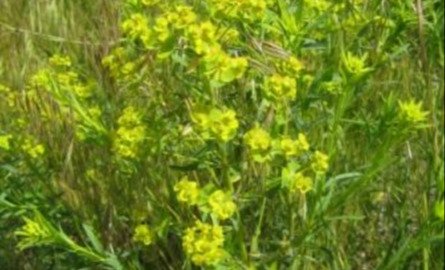
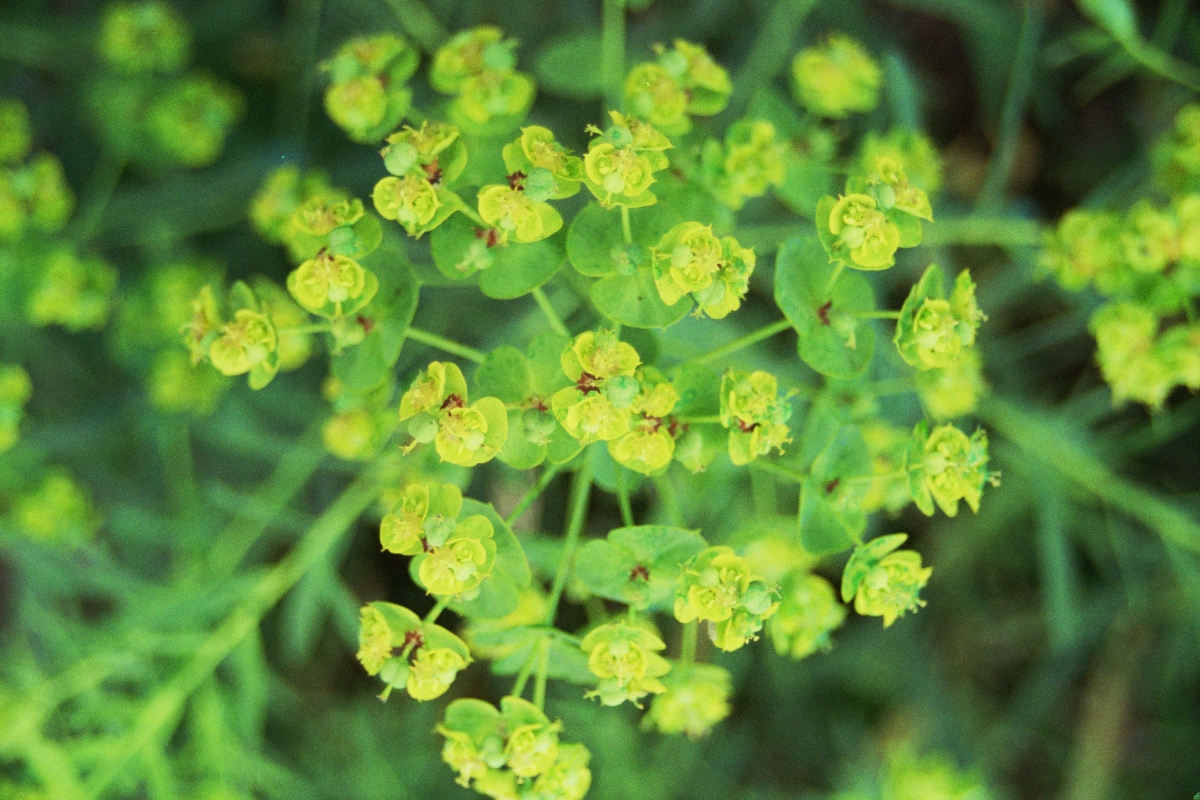
Leafy spurge has an extensive lateral root system and clusters of small yellowish-green flowers growing to 80 cm tall. Leafy spurge has shown to be extremely invasive in many habitats with infestations becoming very dense. The milky latex is toxic to some livestock and this species generally increases on heavily grazed lands.
Type: Perennial
Habitat & Impacts: Leafy spurge has shown to be extremely invasive in many habitats with infestations becoming very dense. The milky latex is toxic to some livestock and a skin irritant to humans. The plant is also an airborne allergen for humans. This species generally increases on heavily grazed lands.
Method of Spread: Leafy spurge reproduces by seed or by lateral roots. Plants are productive, producing up to 130,000 seeds. Seeds remain viable for up to 8 years in soil but most will germinate within 2 years. Most seeds land within 4.5 m of the parent plant, but animals or water can transport seeds further.
