
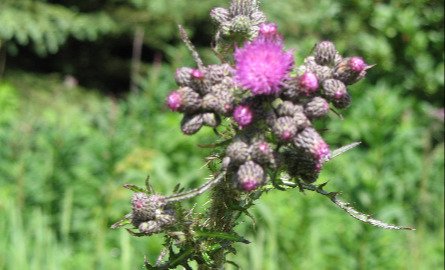
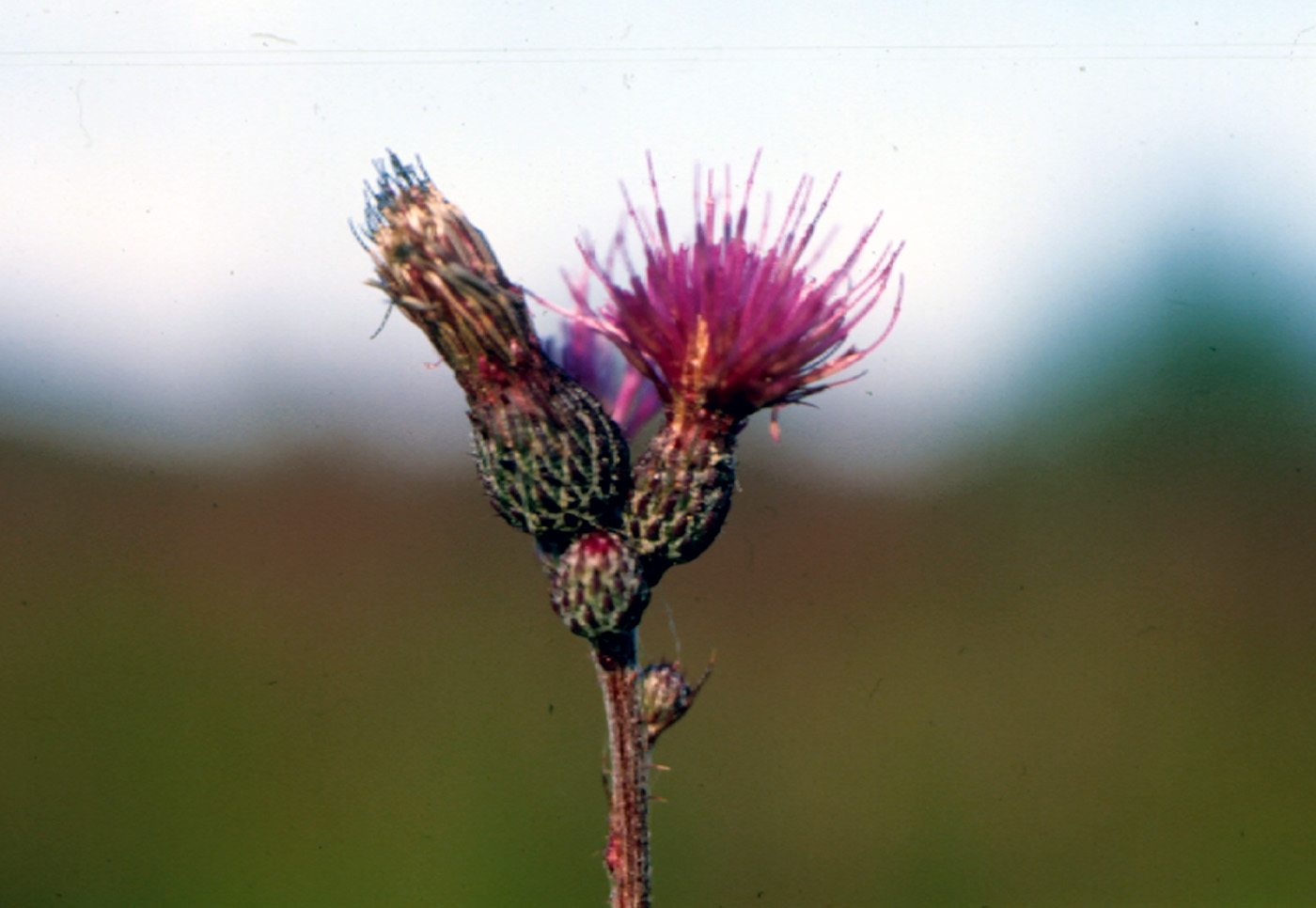
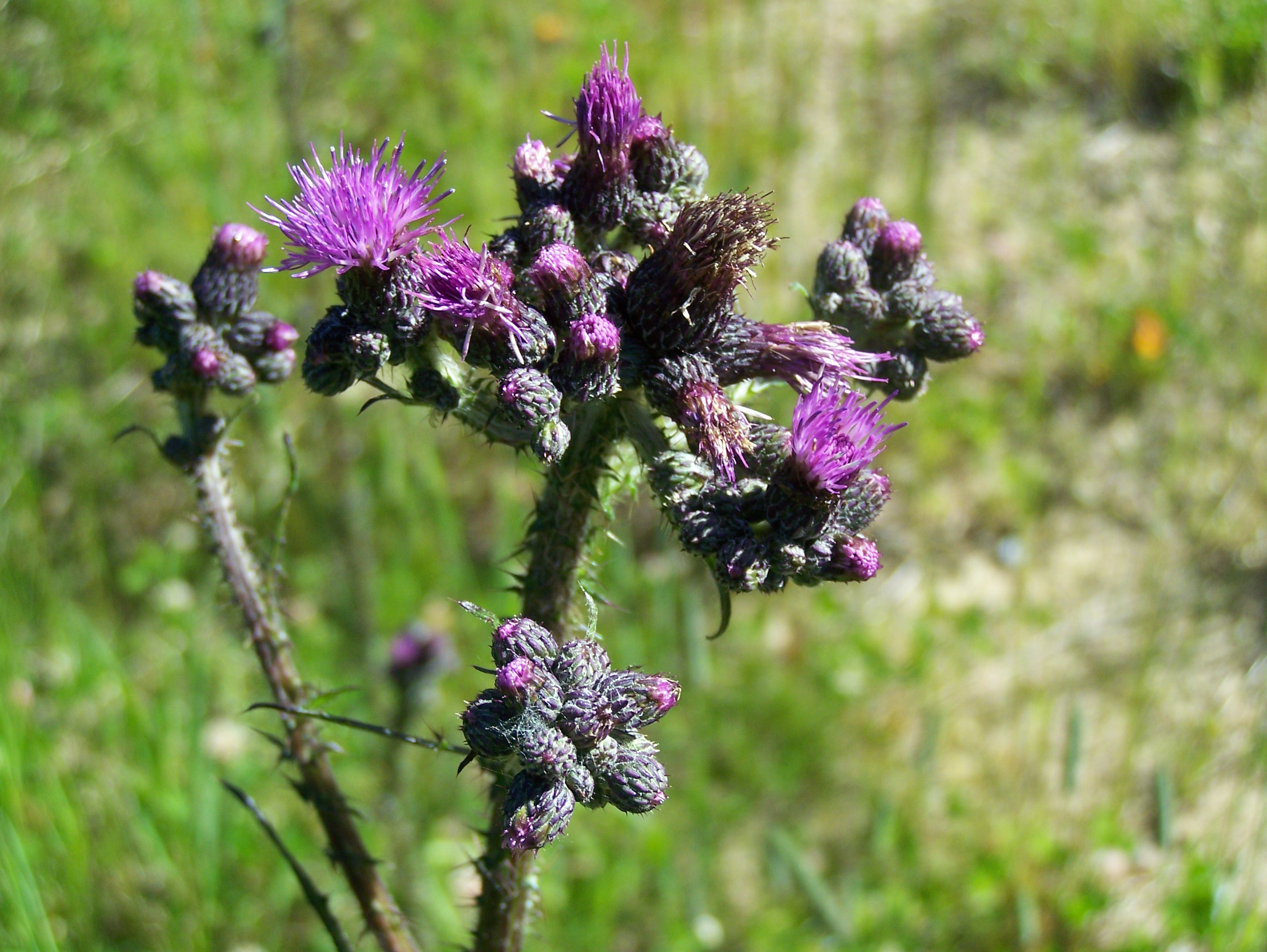
Latin Name: Cirsium palustre
Physical Description: Marsh plume thistle is a biennial tap-rooted forb growing up to two metres tall with a cluster of large purple-pink flowers and bracts with large spines.
Type: Biennial
Habitat & Impacts: Marsh plume thistle grows on moist to wet areas on most soil types, provided seepage is present. Typically, this species grows in unshaded sites but can tolerate some shade. Marsh plume thistle can invade undisturbed riparian areas and moist pastures and reduce or eliminate native vegetation and reduce ecological functioning in these sensitive sites. This species generally does not pose a risk to agricultural crops as it does not tolerate cultivation but may pose a risk to forestry plantations by overtopping and then pressing and/or shading seedlings.
Method of Spread: Marsh plume thistle reproduces exclusively from seed dispersed by wind, water, or birds. Seeds can travel large distances, especially in area with strong consistent winds. It is unknown how long seeds remain viable in the soil.
